
PicUp vs Allied Express.
A specialist view of big & bulky last-mile against a general freight and courier model. Allied Express is an established Australian courier and freight name. This page presents PicUp's own measured performance, plus the public review record for both, so you can compare on the criteria that decide customer experience for big items.
- 99.95% First Day Delivery Success at scale in Brisbane metro.
- 98%+ DIFOT, and damage and lost parcel claims under 0.5%.
- 4.6★ from 489 Google reviews, against Allied Express at 1.4★ from 914 (June 2026).
- Built only for big & bulky, up to 3m and 150kg, with white glove tiers.
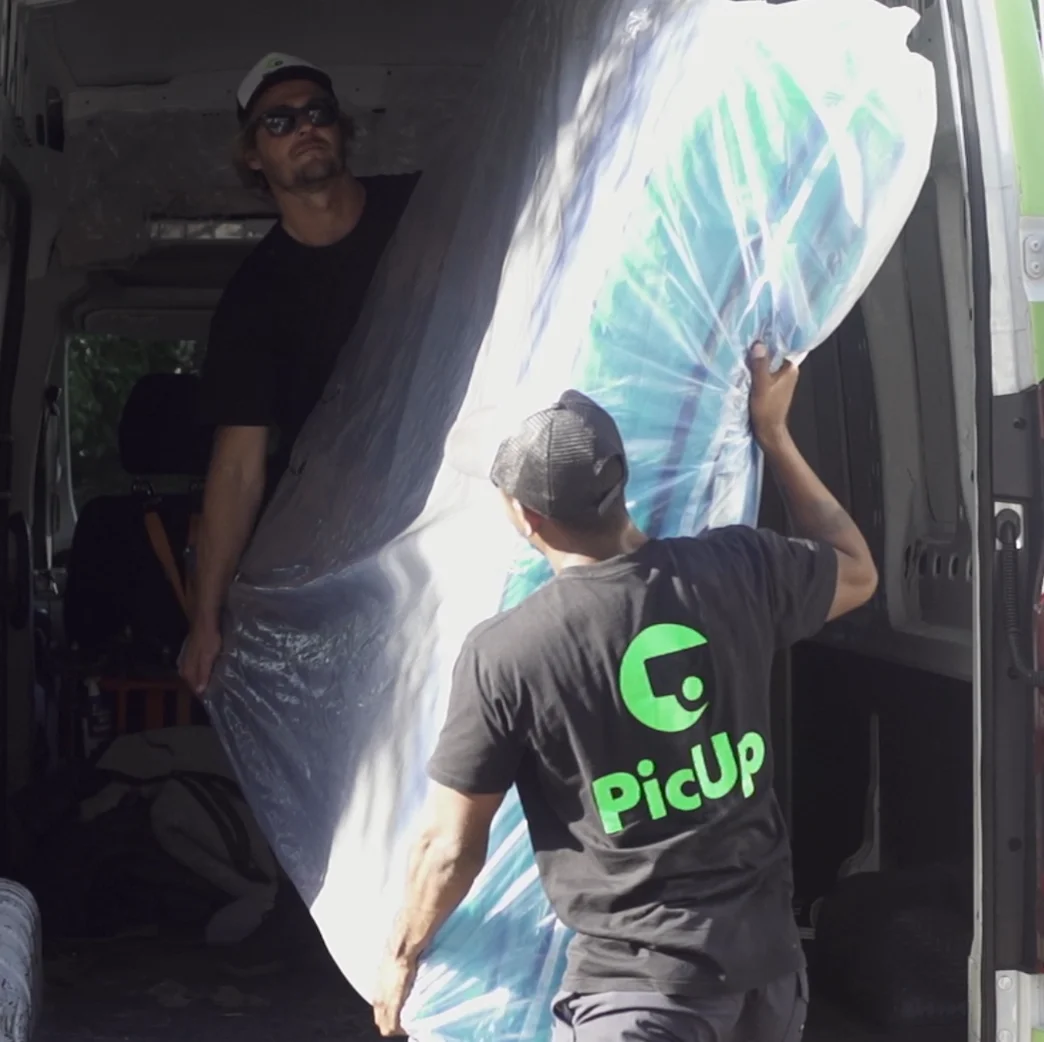
Your carrier's failures become your brand's problem.
Before comparing any two carriers, it is worth being clear about what is actually at stake. Shoppers do not separate the carrier from the retailer. When a bulky delivery goes wrong, the retailer wears it, in the review, in the support queue, and in whether that customer ever comes back.
of consumers hold retailers accountable for failed deliveries, not the carrier.
of consumers say on-time arrival is core to a great delivery experience, even more important than low-cost shipping or returns.
of consumers say a great delivery experience makes them return to a retailer, even if it costs more than competitors.
of consumers abandon carts when delivery isn't flexible.
of consumers would abandon a retailer permanently due to unresolved delivery issues or poor post-purchase support.
of first delivery attempts fail across the industry, on published estimates, depending on carrier and delivery type.
First Day Delivery Success is what PicUp holds against that benchmark, at scale, week after week.
Consumer statistics: Bringg blog post, The Top 3 2025 Last-Mile Trends and 2026 Outlook, January 2026. First-attempt failure range: published estimates of 8% (FreightWaves / OneRail) to 20% (Harvard Business Review). PicUp figure is our own measured performance, described below.
General freight and specialist bulky are different jobs.
General courier and freight networks are engineered for volume and speed across many parcel sizes. Big & bulky home delivery is a different problem: heavy, awkward items, a customer waiting at home, and a service moment that becomes part of your brand. This page keeps things factual. We present PicUp's measured performance and the publicly checkable review record, and describe general freight limitations in neutral terms, without inventing figures about another carrier.
- Item fit: is the network built for oversized, heavy and awkward goods?
- First Day Delivery Success and DIFOT for the bulky category specifically.
- Service tiers: room of choice, white glove, assembly, rubbish removal.
- Surcharges: how predictable is the final invoice?
- Visibility and support when a delivery needs intervention.
The rating gap isn't a rounding error.
Customer sentiment is the one carrier metric you can check yourself, before you sign anything. Here is how the market looks on public Google reviews.
| Provider | Google rating | Reviews |
|---|---|---|
| PicUp | 4.6 ★ | 489 |
| Capital Transport | 4.1 ★ | 429 |
| Hunter Express | 1.6 ★ | 1,342 |
| Allied Express | 1.4 ★ | 914 |
Source: public Google review listings, pulled June 2026. Ratings and review counts move over time. The Allied Express and Hunter Express scores are significant precisely because of their review volume: 914 and 1,342 reviews respectively is not a small or skewed sample. A rating that low, held across that many reviews, reflects a pattern rather than a handful of bad days.
99.95% First Day Delivery Success, at volume.
Published estimates put industry first-attempt delivery failure somewhere between 8% and 20%, depending on carrier and delivery type. That is the benchmark our own measured performance should be read against.
Bulky last-mile for the leading global e-commerce platform
Challenge
A bulky last-mile partner was needed across the Brisbane metro region for a client with notoriously high delivery standards. Existing carriers could not meet first-delivery-success requirements, or deliver the fleet flexibility that sharp volume swings demand.
Solution
A fleet mix of 1T–2T vans servicing Brisbane Metro 7 days per week. Unique to PicUp, our DTC–B2B–B2B2C network lets the fleet flex as volume swings necessitate: surging when needed, pulling back when not.
Result
99.95% First Day Delivery Success, sustained across an average of 2,000 bulky last-mile deliveries every week.
Proven capability at scale: ~2,000 bulky deliveries per week
PicUp measured performance. FDDS is the share of deliveries completed successfully on the first scheduled delivery day. Industry benchmark: published estimates of 8% (FreightWaves / OneRail) to 20% (Harvard Business Review) of first attempts fail.
Two different networks.
A general freight and courier model
Optimised for parcel volume across many sizes. Oversized and heavy items can attract layered surcharges, sit outside standard service tiers, and rarely include in-home options like assembly or rubbish removal. The delivery experience is built for throughput rather than the retail moment at the door.
The PicUp way
A network built only for big & bulky last-mile. Fleet from utes to 4T pantech with tail-lift, up to 3m and 150kg, 1-man or 2-man teams, and premium tiers as standard options. Pricing built to your model with far fewer surcharge line items, so the invoice is predictable.
Measured strengths for the bulky category.
These are PicUp's own measured numbers, from delivering big & bulky orders for major Australian retail and e-commerce brands.
Built for bulky
From a boxed rug to a 150kg wardrobe, handled by a fleet and teams designed for oversized goods, not squeezed onto a parcel belt.
Retail-grade CX
99.95% First Day Delivery Success and 98%+ DIFOT, with white glove options that protect your brand at the door.
Predictable pricing
Far fewer surcharge line items than typical carriers, plus live tracking and support that answers. Better value through higher fleet utilisation, not corner-cutting.
Compare cost per successful delivery, not cost per attempt.
A quoted rate only tells you what one attempt costs. It says nothing about how often that attempt works. Once you price in the failures, the cheaper carrier is frequently the expensive one.
The redelivery
A failed first attempt doesn't cost you nothing, it costs you a second run: another vehicle, another slot, another driver, often at short notice.
The support load
Every failure generates contacts. Your team fields the calls, chases the carrier, re-books the customer and absorbs the escalation, on your payroll, not the carrier's.
The brand cost
The hardest line to invoice and the most expensive. Reviews, repeat-purchase rates and lifetime value all move, and 47% of consumers blame you, not the carrier.
True cost per successful delivery = quoted rate + failed attempts + support cost + brand cost
Run your own numbers through that framework, with your own volumes and your own failure rate. A carrier quoting less per drop but failing more often does not save you money. It moves the cost somewhere your finance team isn't looking.
Reachable any day of the week.
When a bulky delivery needs intervention, the speed of the response decides whether it becomes a review. Retailers and their end customers can reach PicUp any day of the week, and nothing goes into a void overnight.
Human customer support. Real people, reachable by you and by your end customers.
AI agents answer and record every call, message and query. Anything unresolved is automatically flagged to our CS team to action first thing the following morning.
“Going the extra mile to deliver smiles to your last mile.”
The numbers retail brands trust us on.
Comparing more than one carrier? Read how PicUp compares to Hunter Express, including the product categories Hunter's transit cover excludes. For the wider picture, start with our overview of last-mile delivery for bulky goods, or use our checklist of things to look for in a bulky last-mile carrier.
See how PicUp handles your bulky volume.
Share your product profile and coverage. We will show you how a purpose-built bulky network changes first delivery success, damage and customer experience.
Book a Call with PicUp